GATE: Full Lifecycle Text Analytics
(20 years work in 20 minutes, plus questions)
|
Hamish Cunningham,
University of Sheffield
These slides: tinyurl.com/figint13
(FIG: First International GATE
symposium, number 6)

|
Contents
- 0. Background; Housekeeping
- 1. GATE in the Wild
- Semantics in the Media
- Text Mining for Biomedicine
- Other Users
- 2. The GATE Family
- Developer, Embedded
- Teamware, Process
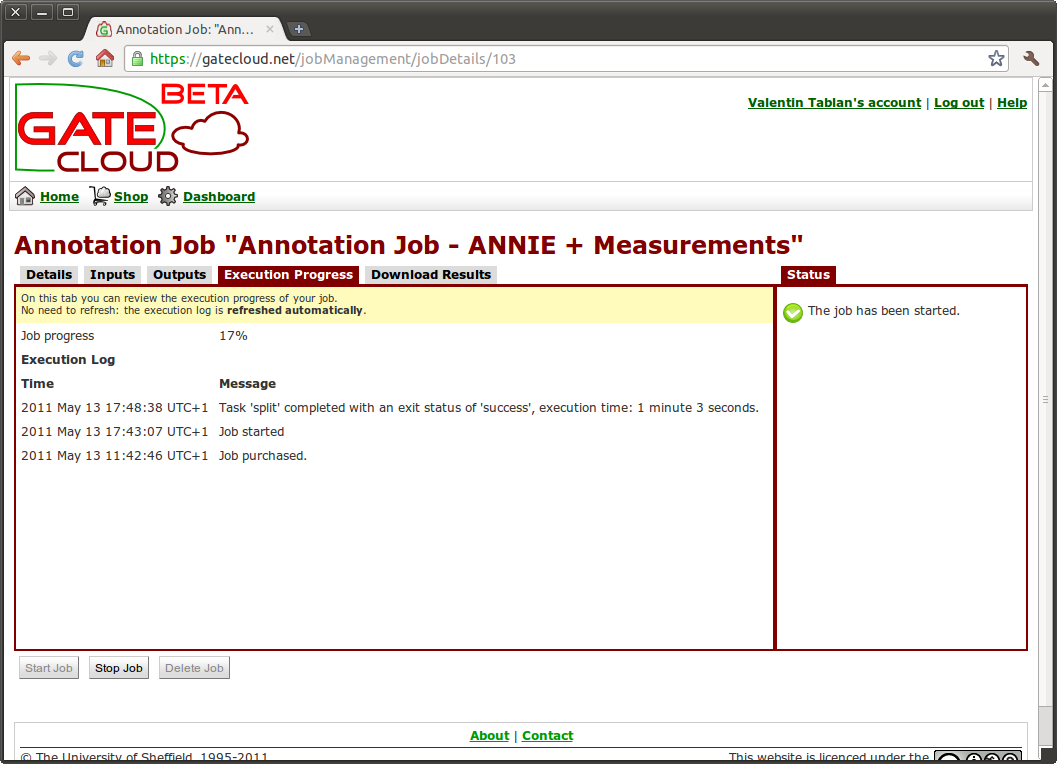
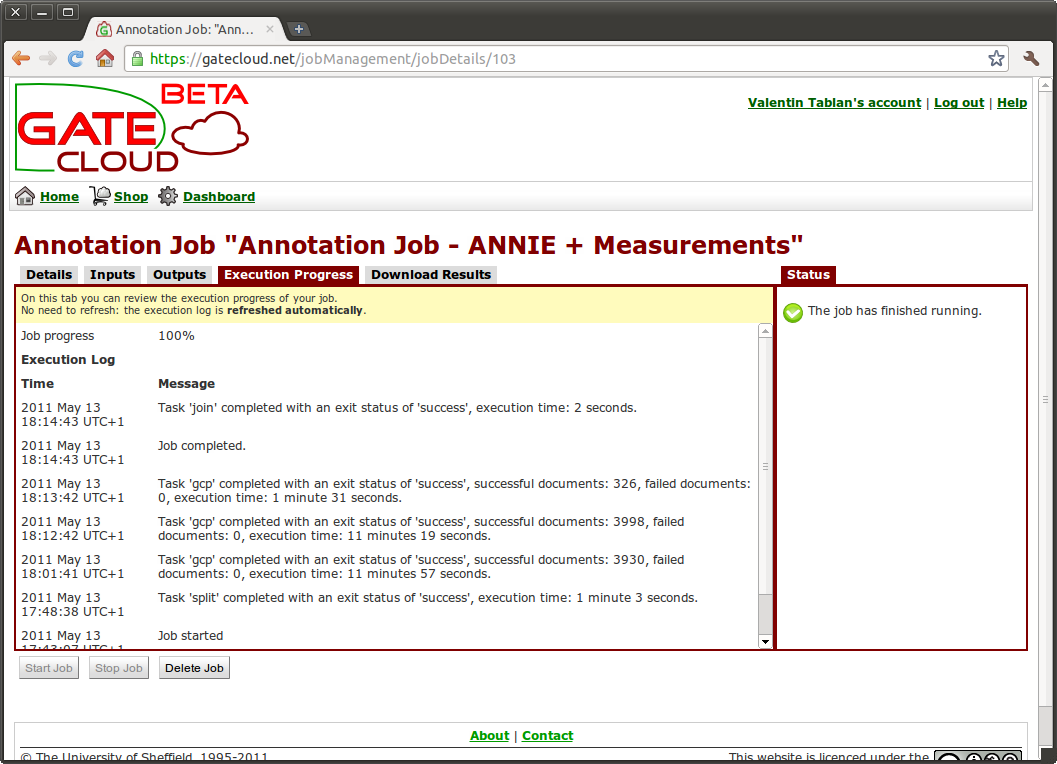
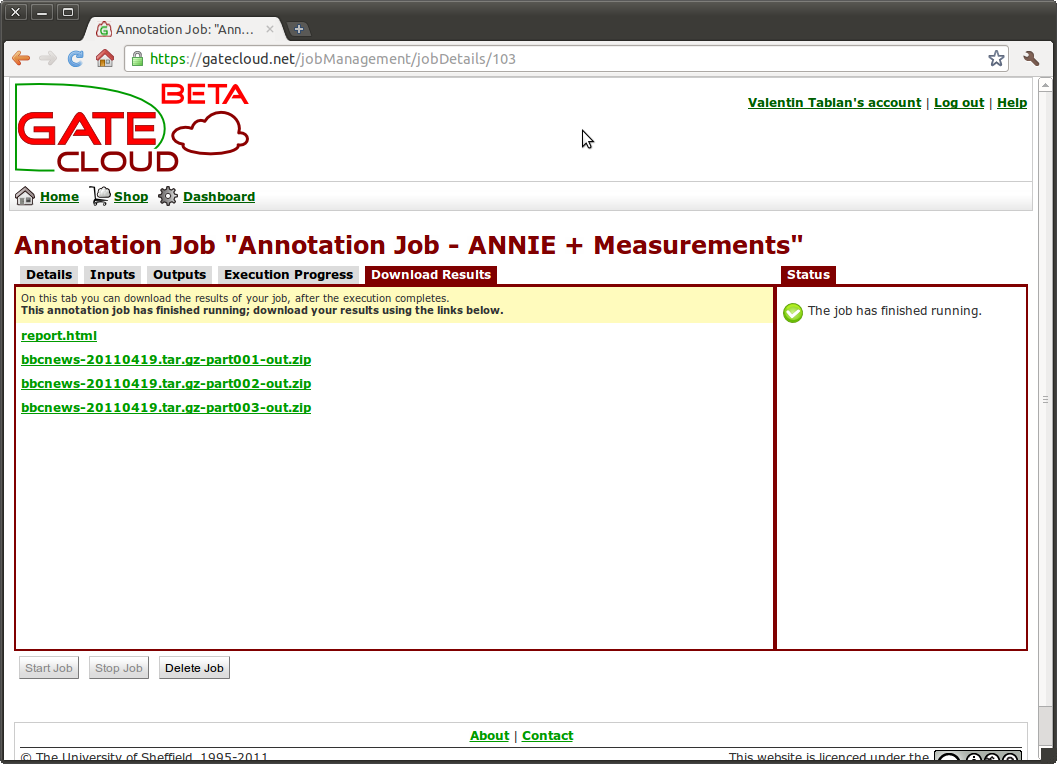
- Cloud
- KIM, OWLIM, Linked Data
- Mímir
- 3. A Lifecycle for Text Analysis
|
Background
c. 1991: Welcome to the miserable crew?
2013 ☺: what changed?
- the key factor, of course, is how many elements of our lives have moved
on-line, and the role of text as a communication medium in those elements is
absolutely central
- this has meant transformations in many areas, including
- the size of the data we work with
- the importance of that data (sadly, the most profitable area is
advertising — sometimes it seems like our entire field has become a
question of who clicks on which advert — some examples of non-advertising
stuff below...)
What didn't change?
|
Square Fish Syndrome
- Imagine you're looking at a river under which
a fish swims by
- You can show the ripples and eddies
- to an artist and ask them to draw a fish
- to a statistician and ask them to model a fish
- In both cases you're liable to get a square fish
- Human language processing can be done by
- linguists intuiting about grammar
- machine learning creating statistical models
- Language is a surface phenomenon but
communication is about intelligence
|
|
- Progress:
- modern approaches use elements of both methods, and large quantities of
data, and large quantities of human judgements about that data
- ways to represent results have changed, with linked data,
location-dependent services, and etc.
- But, fundamentally, we have yet to see any dramatic breakthrough
Which means...
- the most important questions have often been:
- how can we build systems that achieve the plateau as cheaply and
efficiently as possible?
- how can we mininise the effort in adapting these systems to new problem
domains?
- how can we ensure that they work reliably and predictably over time?
- how can we maximise reuse across systems?
- these were the question that we started work on in the early 1990s, and
that's what became the GATE research programme...
- what are people doing with it in 2013?
Housekeeping Information (1)
If you hear a fire alarm?
...run in circles, scream and shout


Housekeeping Information (2)
The building is fully equipped with toilets
Housekeeping Information (3)
Members of the GATE team are available at all times

Contents
- 0. Background; Housekeeping
- 1. GATE in the Wild
- Semantics in the Media
- Text Mining for Biomedicine
- Other Users
2. The GATE Family
- Developer, Embedded
- Teamware, Process
- Cloud
- KIM, OWLIM, Linked Data
- Mímir
3. A Lifecycle for Text Analysis
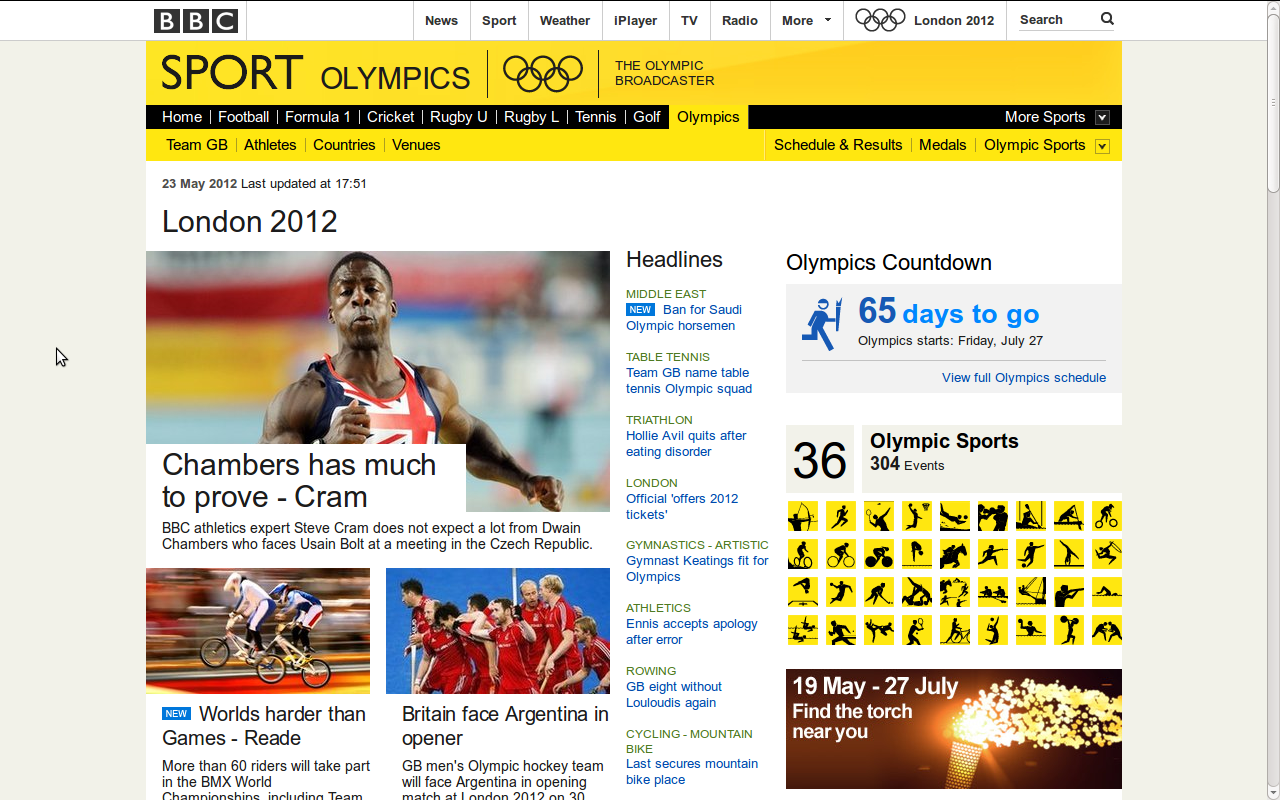
The greatest sporting event ever?
The London olympics.
And the leading local media organisation covering it?
The BBC.
And the best text analytics ecosystem? (You can see where this is going...)
GATE, of course, which is why the BBC are using it under their all their
sports web coverage :-)
...
GATE at the Olympics (2)
The BBC system has some interesting characteristics:
- big (or medium) data, very high query volumes
- extremely flexible in face of data evolution (an unknown gets a gold, a
trainer gets arrested with steroids, ...)
- linked data is key
- documents are annotated relative to a domain-specific OWL model (using
GATE's LKB gazetteer from Ontotext)
- everything is served out of a clustered semantic repository
- changing the pages served and their content is a semantic operation —
which starts to move the production focus away from the DBA and the web
developer and back to the journalist
- the austerity quote: their world cup 2010 system achieved cost savings of
~80% compared to a conventional database-backed web system
- now serves more than 10,000 pages
Semantics in Media — the New Thing?
(slides from [ex-]PA's Jarred McGinnis)
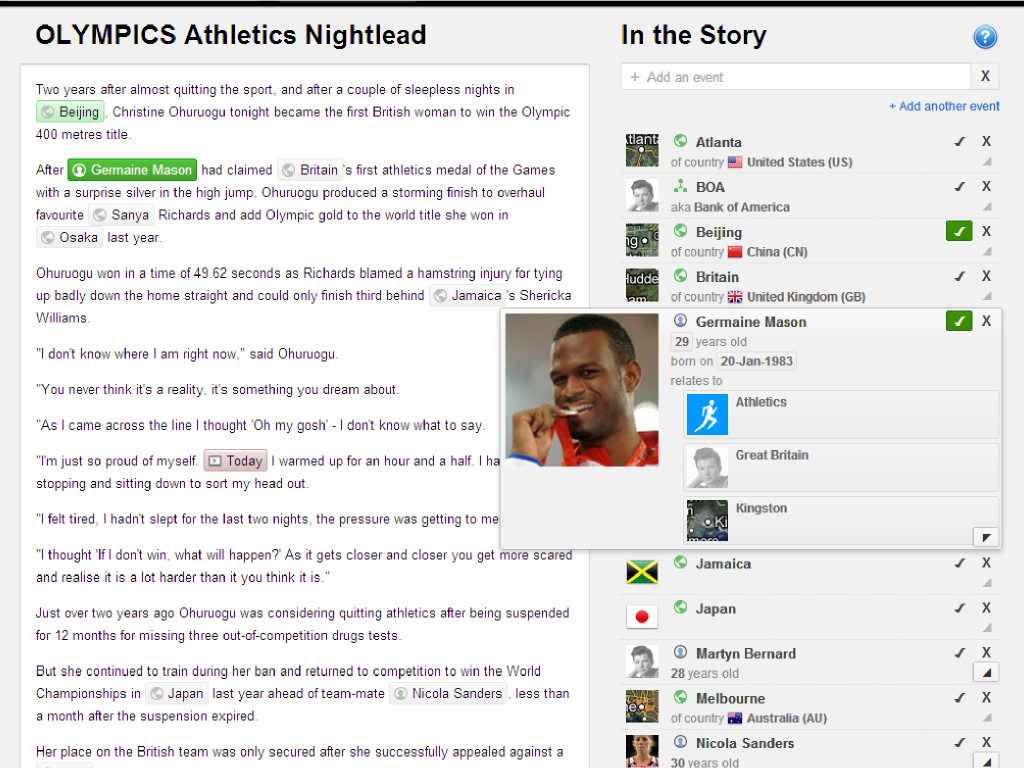
The Press Association are running a similar programme (following on from
long-running GATE project that processes captions in massive image library)
Media (2)
- system helps the journalist create the metadata
- feedback from the journalist helps system accuracy
- when you've got good metadata in an OWL store you can access the data with
extreme flexibility... e.g.
- generate the pages on the BBC site,
- sell custom feeds into niche markets
- drive visualisations or populate COTS data analysers
|
|
- now partners with Sheffield/Ontotext/IMR in the AnnoMarket project (more
later)
Media (3)
- CNN commissionned a similar system
- News International contacted us in 2011 but we ignored them and they went
away :-)
- media is a good application area for text analysis and semantic modelling
technology, partly because journalistic language is very well-behaved
(relatively speaking!), partly because the content is extremely valuable,
and partly because existing classification schemes are typically applied
quite rigorously
- life sciences and biomedical data has some similar characteristics...
Media (4) — Social/Mobile
- EPSRC programme in summarisation and mining of consumer-generated media
- TrendMiner: cross-lingual trend analysis in real-time media streams
- won the Hypertext 2013 Ted Nelson best newcomer award for
Where's Wally?, geolocation of Twitter posts
- new in 2013/4: computing veracity (the 4th V of big data, after Gartner's
volume, velocity, variety)
Biomedical Example (1): EHR Mining
...sneak preview...
Bio Example 2: Genetic Epidemiology
- it is hypothesised that
- genetic factors play a strong role in susceptibility to disease
- in future targetted pharmaceuticals will be tailored to individual
genetics
- a substantial body of work looks for associations between mutations and
diseases
- World Health International Agency for Research in
Cancer, the world's biggest cancer epidemiology lab.
- genetics groups: which mutations (SNPs) associate with carcinogenesis?
- new trends in genetic association studies (stimulated by decreased cost of
sequencing):
- objective: identify common genetic variants involved in susceptibility
to disease
- candidate gene approach: genes selected and tested based on prior
knowledge/hypotheses
- GWAS approach: test “all” common genetic variants with no prior
knowledge/hypothesis (Genome-Wide Association Studies)
Genetic Epidemiology (2)
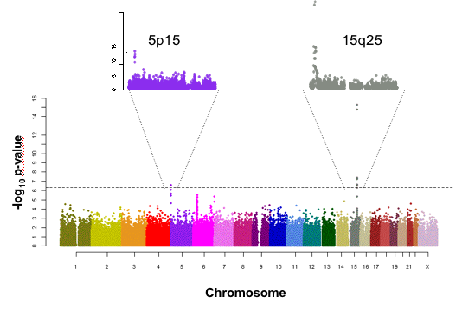
The problem: needle (significant associations) in a haystack (large-scale
gene sequence probes)
Genetic Epidemiology (3)
The WHO results
- Nature paper 2008: GWAS result showing a particular genetic
polymorphism correlates with increased risk of lung cancer in smokers
- required a large amount of manual work to examine data from sensor arrays
- the usual statistical techniques need large numbers of samples to make the
analysis usable and reliable
An annotation experiment
- our experiment used text analysis to add prior knowledge about genes
- e.g. if a gene is expressed in lung tissue, represent this in the BFDP model
when calculating relevance of sensor data for related polymorphisms
- use annotation to find papers that discuss particular genes, diseases,
anatomy and so on (AdAPT — Adjusting Association Priors with Text)
- works using half the data (potential saving: €250k)
Genetic Epidemiology (4)
- Confirmation of the methodology: new association found using AdAPT for
head and neck cancer
- Future plans: epigenetics and gene-environment interaction studies — GxE
Other Users
- SLaM, South London and Maudsley Hospital Biomedical Research Center
- largest UK mental health patient cohort
- sophisticated clinical record information system
- British Library
- Food and Environment Research Agency
- TSO, the Stationery Office
- TNA, the UK National Archives
- SMEs: Fizzback; Innovantage; Sentimetrix; Ontotext; ...
- Corporates:
- ...
- You next?
Contents
- 0. Background; Housekeeping
- 1. GATE in the Wild
- Semantics in the Media
- Text Mining for Biomedicine
- Other Users
- 2. The GATE Family
- Developer, Embedded
- Teamware, Process
- Cloud
- KIM, OWLIM, Linked Data
- Mímir
3. A Lifecycle for Text Analysis
The GATE Family
- an architecture
- an IDE: GATE Developer: an integrated development environment for language
processing components bundled with a widely used Information Extraction system
and a comprehensive set of
other plugins
- a framework: GATE Embedded: an object library optimised for inclusion in
diverse applications giving access to all the services used by GATE Developer
and more
- used worldwide by thousands of scientists, companies, teachers and students
(>30k downloads per year at present, not counting SVN)
- open source (LGPL), 100% java
- a web app: GATE Teamware a collaborative annotation environment for
factory-style semantic annotation projects built around a workflow engine
- a process: not "get this software and it will revolutionise your life" but
"this is how to implement robust and maintainable services"
- GATE Cloud: a parallel and distributed service infrastructure running on
Amazon EC2
- GATE Mímir: (Multi-paradigm Information Management Index and Repository) a
scaleable multiparadigm index built on Ontotext's
semantic repository family, GATE's
annotation structures database plus full-text indexing from
MG4J
- and finally...
- GATE Prospector (semantic search UI)
- related tools from Ontotext (OWLIM, KIM, Linked Data endpoints)
- a wiki/CMS (GATE Wiki.sf.net), mainly to host
our own websites and as a testbed for some of our experiments
- a community
GATE Developer (1)
Motivation: 1990s apparatus envy: physicists had supercolliders; medics had
MRI scanners; language processing researchers had.... Perl?
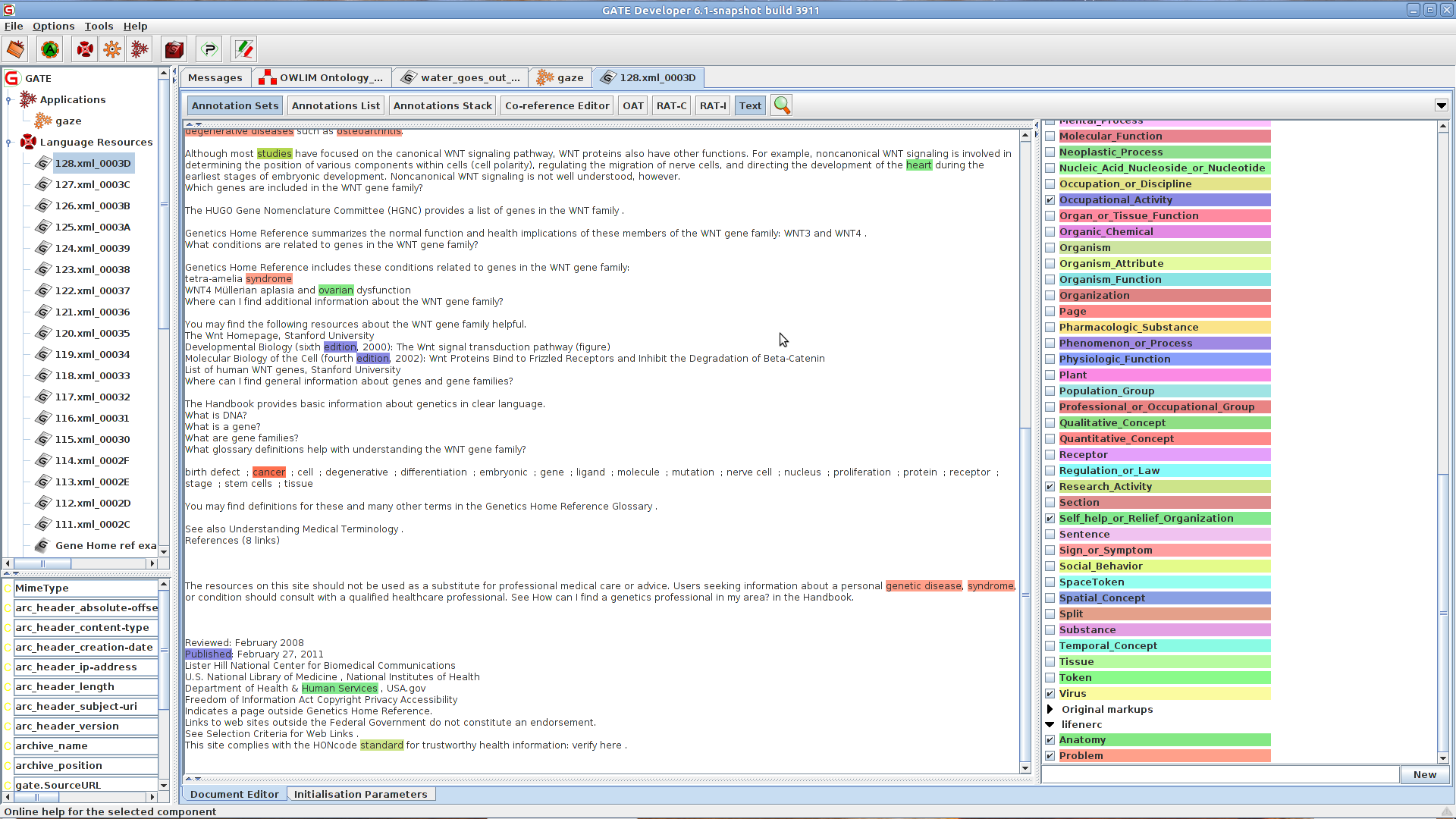
- A specialist Integrated Development Environment for language engineering R&D
- Analogous to
- Eclipse or Netbeans for programmers
- Mathematica or SPSS for maths and stats
- Visualisation and editing text, annotations, ontologies, parse trees, etc.
- Constructing applications from components
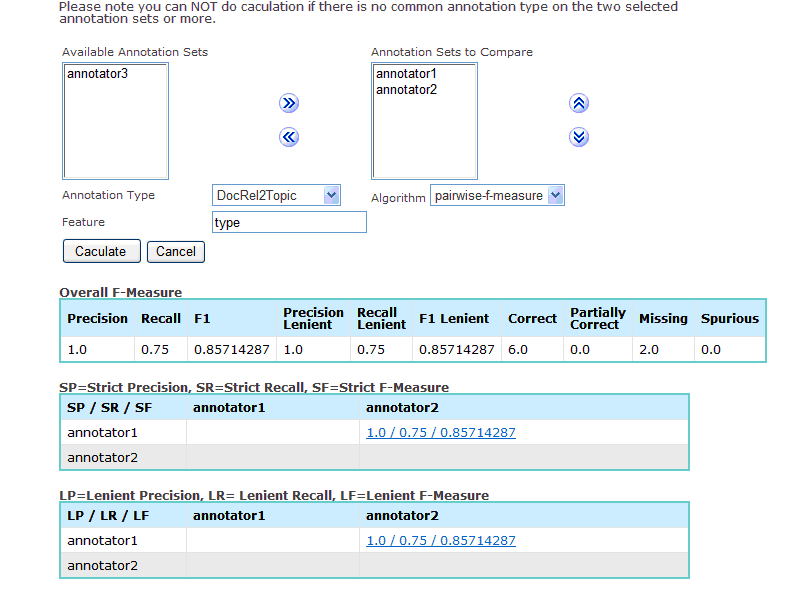
- Measurement, evaluation, benchmarking
- Etc., etc.
GATE Developer (2)
GATE Embedded (1)
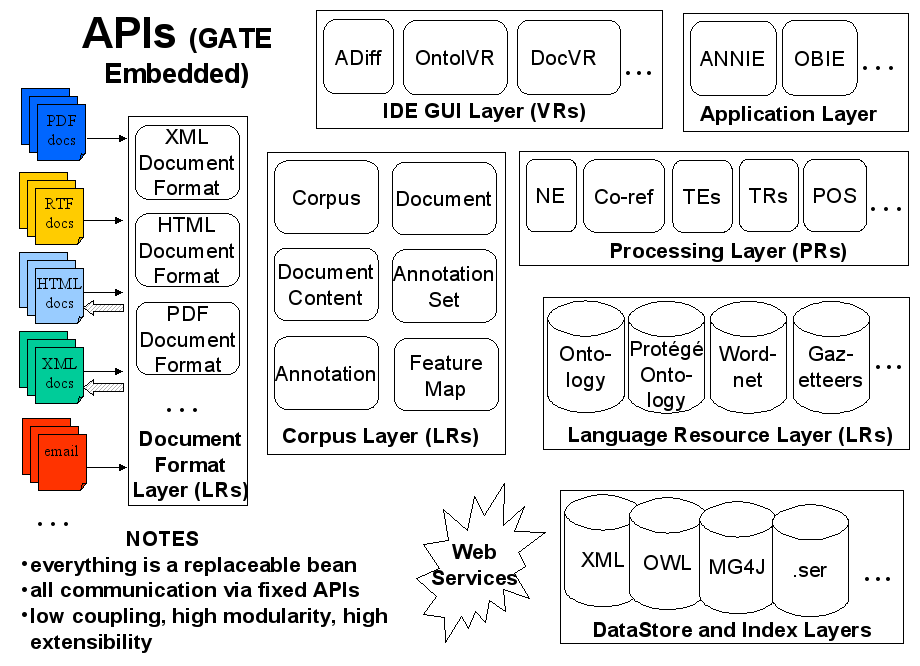
Object-oriented Java framework. Architectural principles:
- Non-prescriptive, theory neutral (strength and weakness)
- Re-use, interoperation, not reimplementation (e.g. diverse XML support,
integration of Protégé, OWLIM, Weka, Lingpipe, OpenNLP, SVM Lite, etc.
etc....)
- (Almost) everything is a component, and component sets are user-extendable
- (Almost) all operations are available both from API (Embedded) and GUI
(Developer)
CREOLE: a Collection of REusable Objects for Language Engineering
- GATE components: modified Java Beans with XML configuration
- The minimal component = 10 lines of Java, 10 lines of XML, 1 URL
GATE Embedded (2)
GATE Embedded (3)
- persistence, visualisation and editing
- a finite state transduction language (JAPE)
- extraction of training instances for machine learning (ML)
- pluggable ML implementations (Weka, YALE, SVM, ...)
- components for language processing, e.g. parsers, machine learning tools,
stemmers, a few IR tools (Lucene, GYM query plugins), IE components for
various languages...
- bundled with a very widely used Information Extraction system (ANNIE)
- MUC, TREC, ACE, DUC, Pascal, NTCIR, etc.
- simple API for RDF or OWL (metadata) via OWLIM
- a suite of tools for biomedical text processing
- kitchen sink
Process, workflow, GATE Teamware (1)
|
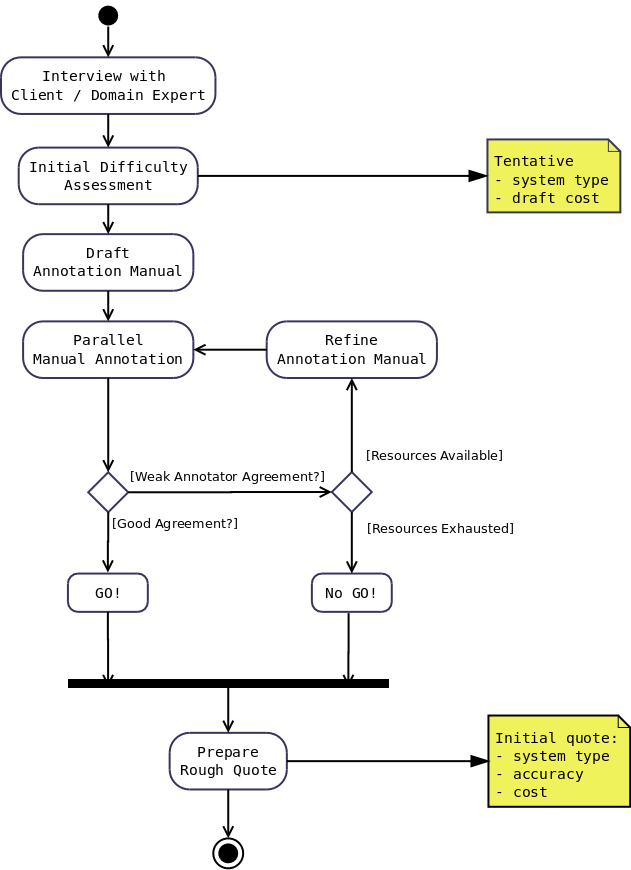
A typical annotation project:
- client discussion, task exploration,
draft extraction specification
- manual annotation, inter-annotator
agreement, iterate the task spec
- prototype a machine solution
- more manual annotation for training
and test data (gold standard)
- implement production solution
- more manual annotation for quality
control, maintenance, adaptation...
| |
|
Process, workflow, GATE Teamware (2)
- The GATE process is a set of steps to follow in the definition, prototyping,
development, deployment and maintenance of semantic annotation processes.
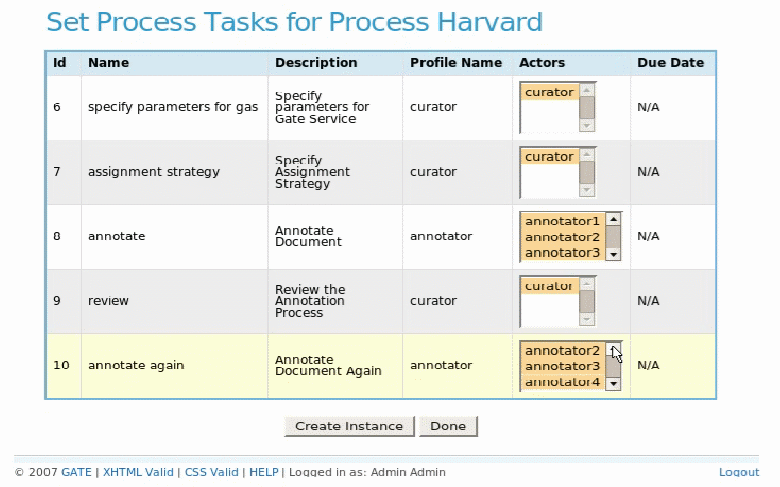
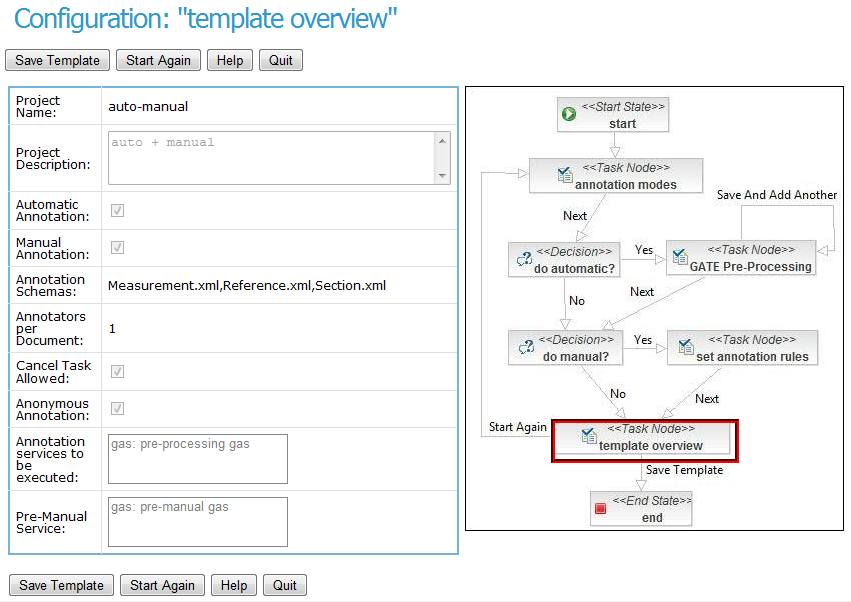
- GATE Teamware is a workflow-based web engine supporting these processes.
- Based on JBoss Process Management engine (BPEL compatible)
- Teamware supports marshalling the manual annotation team, job allocation,
quality control, training, communication, process monitoring...
- Case study: Lighthouse Group runs teams of
annotators in Cebu (Philippines), e.g. supplying 10,000 hours to Khresmoi
project for on-line medical information.
Teamware (3): workflow configuration
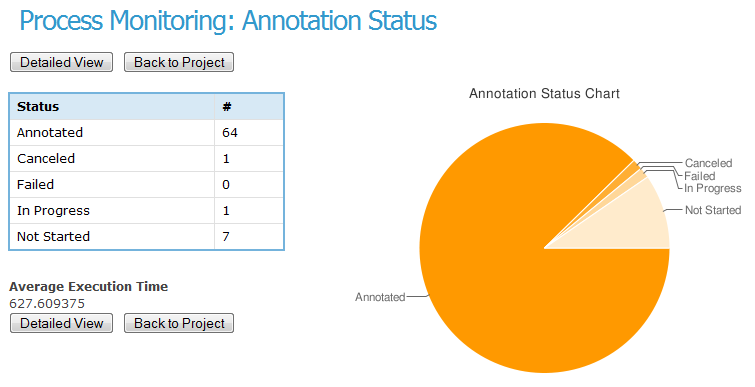
Teamware (4): process monitoring
Teamware (5): quality control
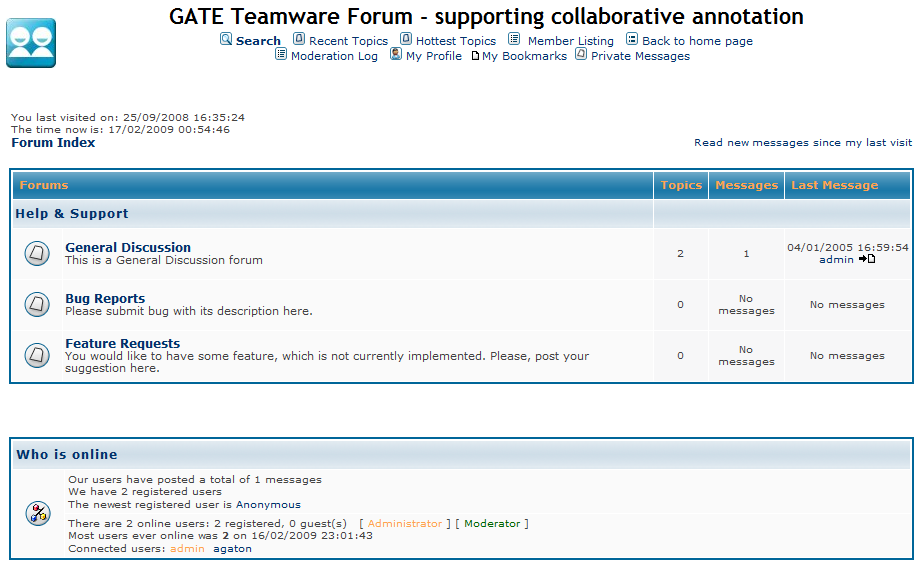
Teamware (6): staff communication
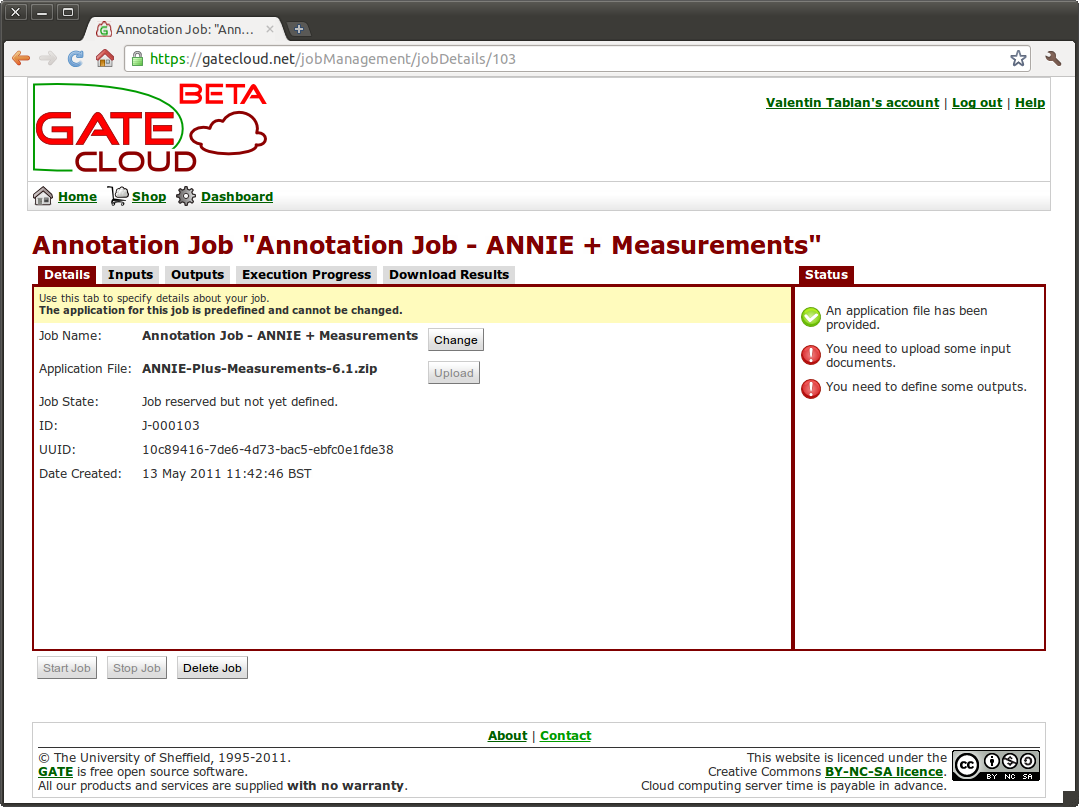
GATE Cloud (1): instant scaling with no CAPEX
Cloud computing means many things in many contexts. On GATECloud.net it
means:
- zero fixed costs: you don't buy software licences or server hardware, just
pay for the compute time that you use
- near zero startup time: in a matter of minutes you can specify, provision
and deploy the type of computation that used to take months of planning
- easy in, easy out: if you try it and don't like it, go elsewhere! you can
even take the software with you, it's all open source
- someone else takes the admin load:
- the GATE team from the University of Sheffield make sure you're running the best of breed
technology for text, search and semantics
- cloud providers' data center managers (e.g. at Amazon Inc.) make sure the hardware and operating platform for your work
is scaleable, reliable and cheap
GATE Cloud (2): engineering
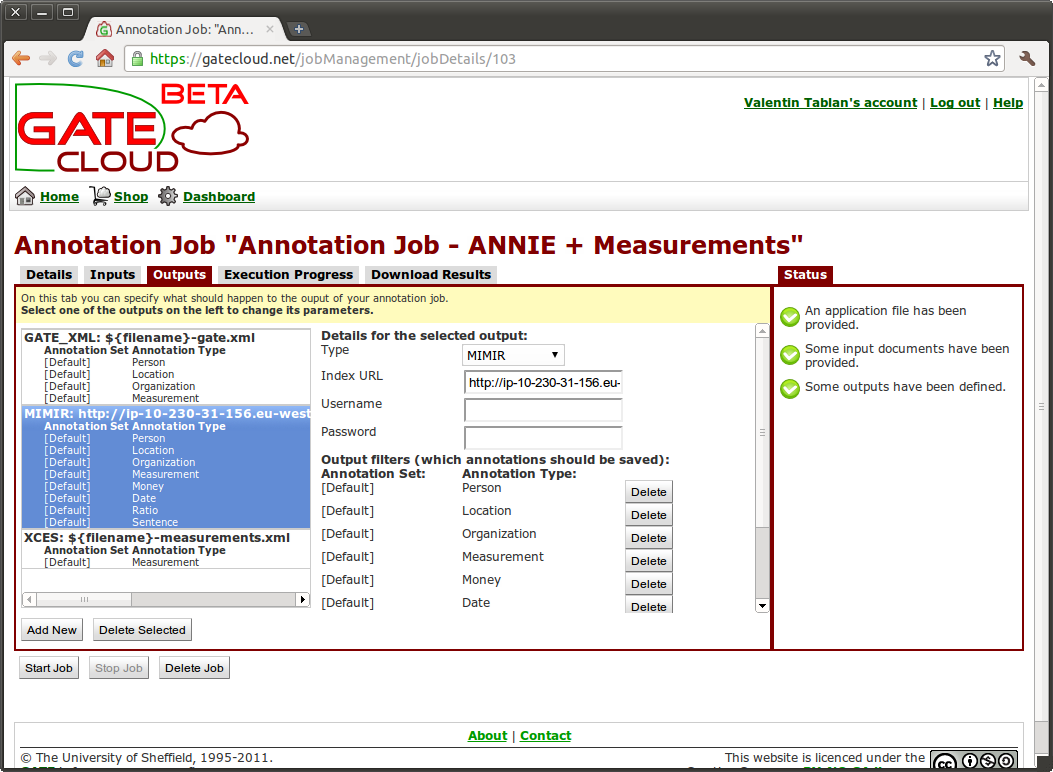
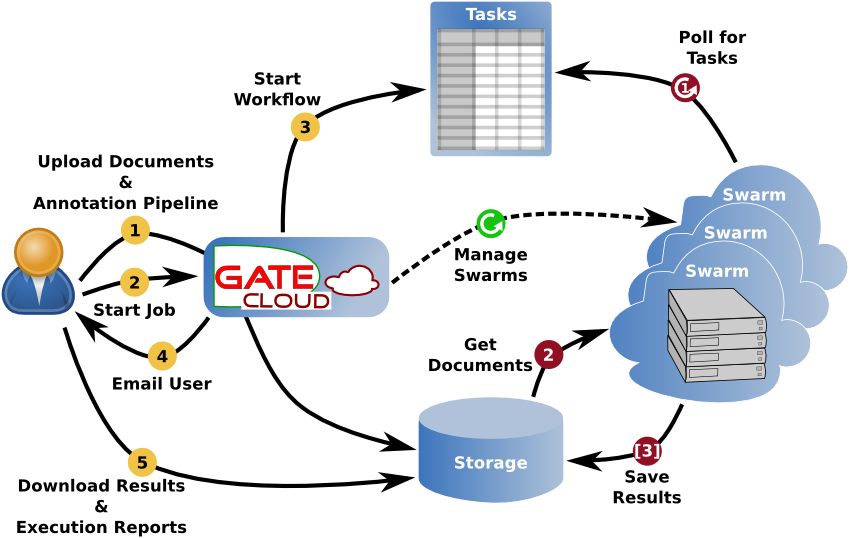
- parallel execution engine of automatic annotation processes + distributed
execution of parallel engine
- scalability: auto-scaling of processor swarms running on top of AWS EC2
- flexibility: parameters configure behaviour, select the GATE application
being executed, the input protocol used reading documents, the output protocol
used for exporting the resulting annotations, ...
- robustness: jobs run unattended over large data sets
- extensively tested and profiled (no memory leaks)
- errors and exceptions that occur during processing are trapped and reported
- if the process crashes (e.g. hardware failure), can be restarted and resumes
execution where it left off
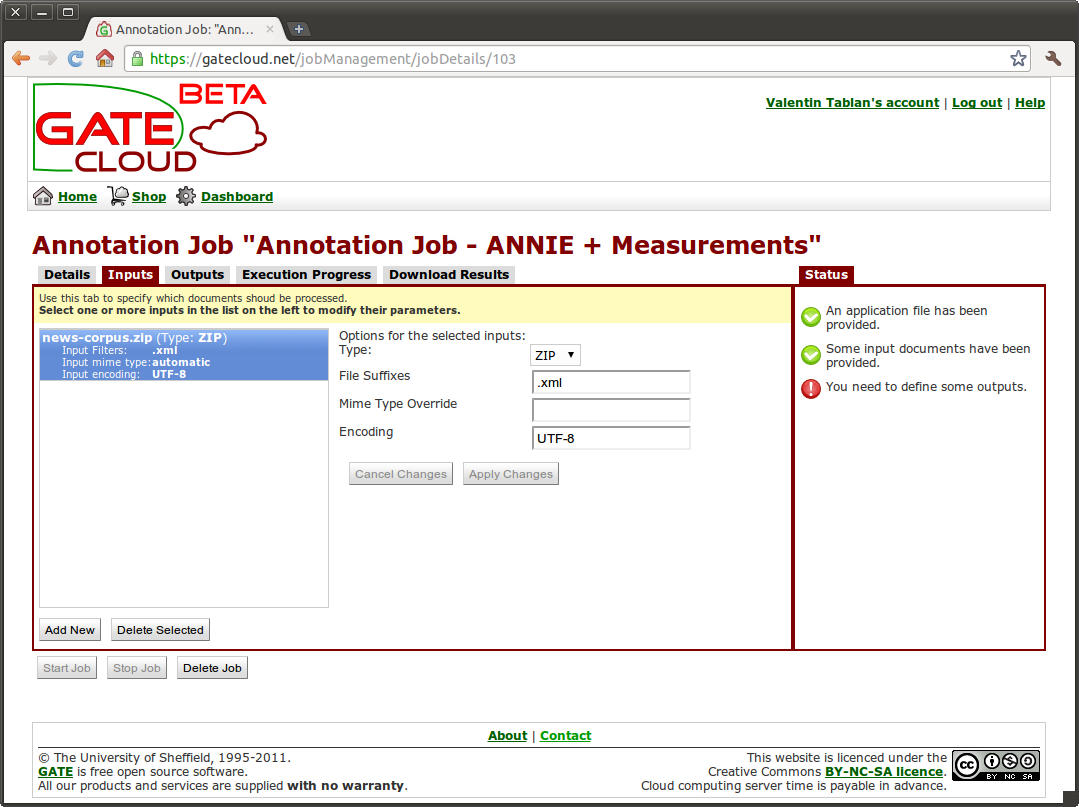
GATE Cloud (3): how it works
GATE Cloud (4): a research perspective
- something like the facility that the the IRF was trying to set up for IR
more generally
- host a growing family of experimental system configurations, data sets,
results
- biased heavily towards information extraction (perhaps some mileage in
adding more mainstream IR?)
- persistence and reuse of experimental setups: virtualisation makes it
possible to store not just data but the entire compute platform operable for
particular experiments or analyses
- plans for 2013:
- bigger big data
- Hadoop
- a marketplace, 3rd-party contributions, AnnoMarket
First Cousins — the Ontotext family
Complementing the GATE tools KIM provides a straightforward front-end deployment
option and their Linked Data offerings a good baseline for model building:
- Ontotext KIM: UIs demonstrating multiple
conceptual and facetted search modes
- see also GATE Prospector (below)
- Ontotext OWLIM: the fastest and most
scaleable semantic repository
- Ontotext FactForge: ~4 billion statements
from the Linked Data cloud
- Ontotext Linked Life Data: over 4 billion
statements from life sci databases including UniProt, PubMed, EntrezGene and
20 more
GATE Mímir: hitting the indexing problem
Circa 2007:
- A new project on patent searching at the IRF =
culture shock!
- Full text, boolean ("100% recall"!)
- Initial prototyping and demo work:
- Conceptual and semantic search and navigation (KIM, as above)
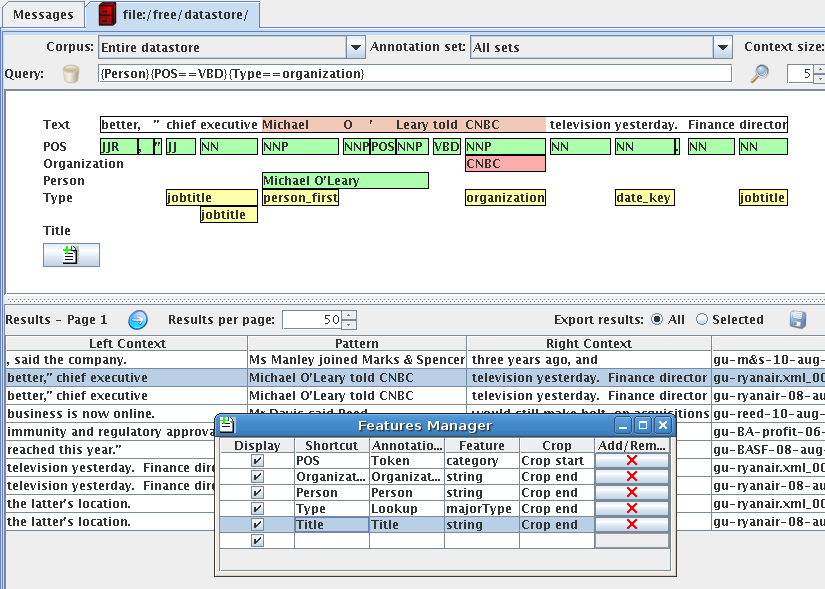
- ANNotations In Context (ANNIC) (right)
- User requirement: put it all together
- Ooops: ANNIC scaled to 200 short docs...
ANNIC (ANNotations In Context):
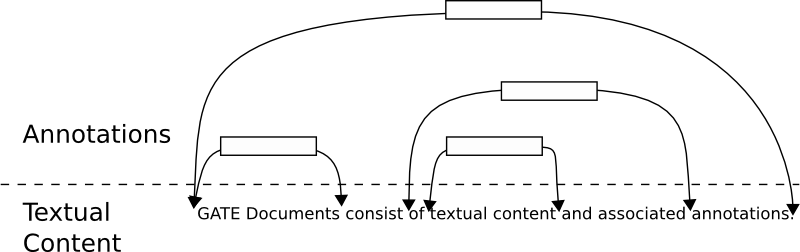
Annotations: the Missing Data Structure (1)
|
How do we search a billion-node annotation graph...?
|
|
Model:
|
|
(Cf. TIPSTER, TEI/XCES, ATLAS, UIMA, ...)
|
| |
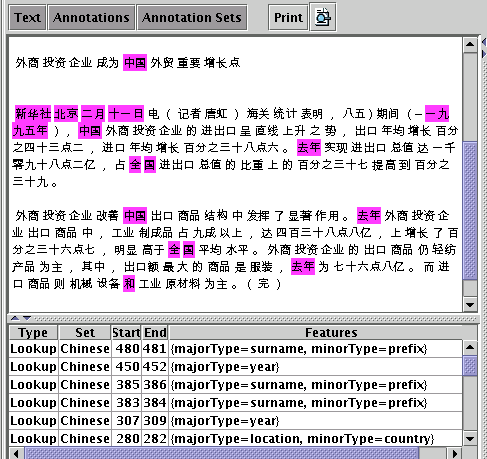
UI example:
|
Annotations: the Missing Data Structure (2)
- Our first thoughts: where can we steal one?
- Annotations: how to index the graph?
- XML indexing and retrieval work doesn't solve it (biased towards trees)
- RDBMS doesn't solve it (biased towards relations)
- augmented full-text indices can help with efficient access, but the data
storage requirements of our prototype (based on Lucene) grew exponentially
with the cardinality of the annotation sets
- May 2008: workshop on Persisting, Indexing and Querying Multi-Paradigm Text
Models, IRF, Vienna
- MG4J (Eric Graf, Glasgow)
- Terrier (Gianni Amati, FUB/Glasgow)
- INEX (Norbert Fuhr, Essen-Duisburg)
- KIM, OWLIM (Atanas Kiryakov, OntoText)
|
- ANNIC (Valentin Tablan, Sheffield)
- HTML-XML Search Engines (Ralf Schenkel, MPG)
- Monet DB (Arjen de Vries, CWI)
|
- May 2009: custom solution based on MG4J (Sebastiano Vigna) + OWLIM called
Mímir...
Mímir: Multi-paradigm Information Management Index and Respository
Mímir is an index engine that can search over:
- text
- textual and semantic annotations
- ontologies and knowledge bases
- scales to the terabyte level
Built on top of: the MG4J text indexing library; GATE's annotation index
(remodelled in MG4J); Ontotext's semantic repository family
- May 2010: version 2: incremental indices; federation
- May 2011: version 3: full source release under the AGPL; cloud release
- 2012: version 4: document centric results mode; 64-bit doc ids
- ...?: version 5: http://gate.ac.uk/mimir/doc/mimir-guide.pdf (p. 61)
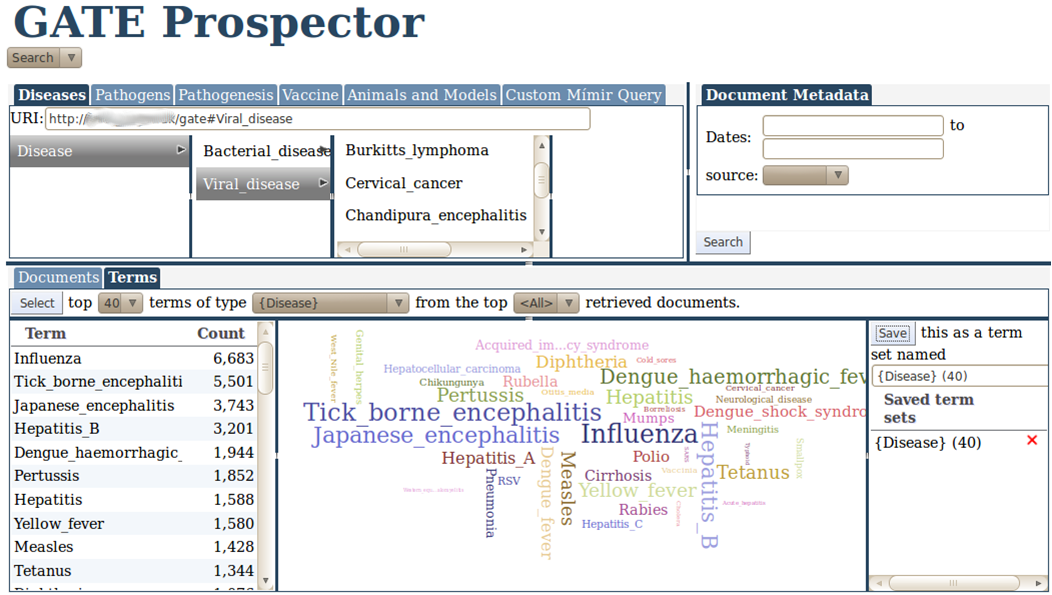
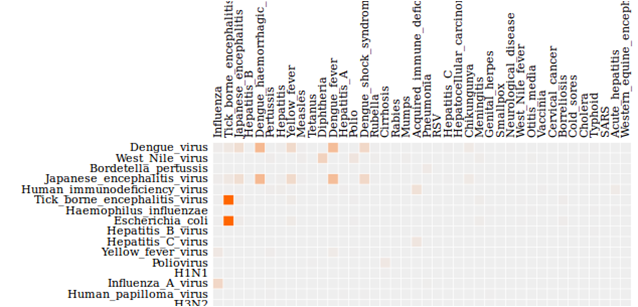
GATE Prospector
All that data, all those query languages, what about a UI?! There are
some developer UIs; or KIM; or:
Contents
- 0. Background; Housekeeping
- 1. GATE in the Wild
- Semantics in the Media
- Text Mining for Biomedicine
- Other Users
- 2. The GATE Family
- Developer, Embedded
- Teamware, Process
- Cloud
- KIM, OWLIM, Linked Data
- Mímir
- 3. A Lifecycle for Text Analysis
Full lifecycle information extraction
- Take one large pile of text (documents, emails, tweets, patents, papers,
transcripts, blogs, comments, acts of parliament, and so on and so forth).
- Pick a structured description of interesting things in the text (a telephone
directory, or chemical taxonomy, or something from the
Linked Data cloud) — call this your ontology.
- Use GATE Teamware to mark up a gold standard example set of
annotations of the corpus (1.) relative to the ontology (2.). (For smaller
jobs use GATE Developer.)
- Use GATE Developer to build a semantic annotation
pipeline to do the annotation job automatically and measure performance
against the gold standard.
- Take the pipeline from 4. and apply it to your text pile using
GATE Cloud (or embed it in your own systems
using GATE Embedded). Use it to bootstrap more manual
(now semi-automatic) work in Teamware.
- Use GATE Mímir to store the annotations relative to the
ontology in a multiparadigm index server.
- (Probably) write a domain-specific UI to go on top of Mímir — see
demos.gate.ac.uk/pin for a simple example.
- Hey presto, you have search that applies your annotations and you
ontology to your corpus (and a sustainable process
for coping with changing information need and/or changing text).
- Your users are happy (and GATE.ac.uk has a "donate"
button ;-) ).
Links
|
More information
|

|